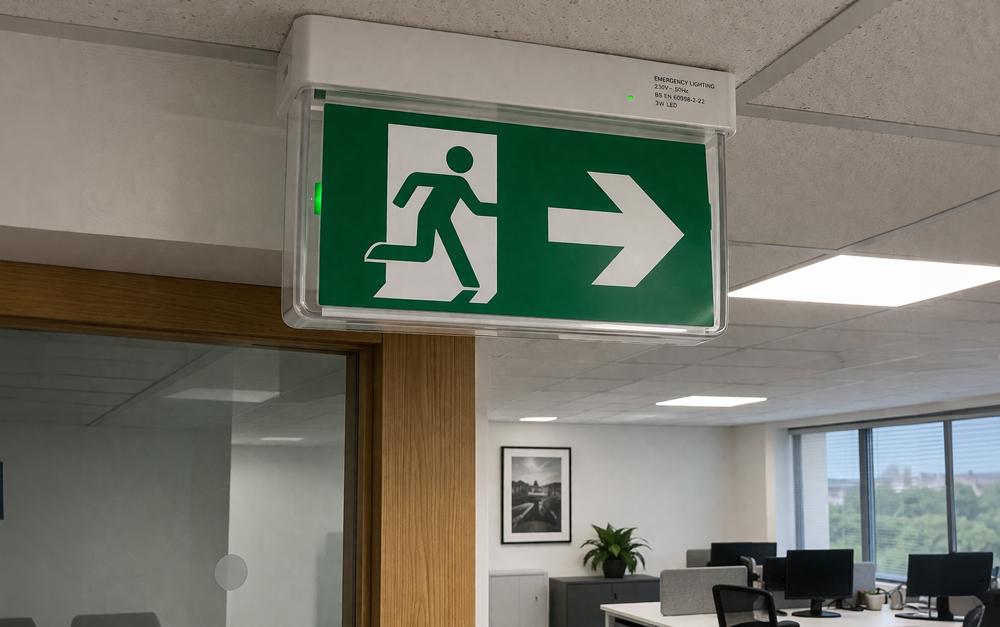
When a commercial facility experiences a sudden mains power failure, whether due to a localised fault, grid issues, or a developing fire, the immediate transition to secondary illumination is a matter of life and death. Reliable emergency lighting provides the vital visibility required to prevent panic, navigate complex escape routes, and safely execute an evacuation. However, the presence of these luminaires is functionally useless without a rigorous, verifiable schedule of emergency light testing.
For Commercial Building Owners, Facility Managers, and Developers, the responsibility of maintaining these systems is a strict legal requirement. A failure in the lighting system during a crisis not only jeopardises life safety but also exposes the business to severe legal prosecution, operational downtime, and voided insurance policies. In our comprehensive guide, we detail the technical requirements, the latest legislative updates, and the commercial imperatives of maintaining a fully compliant emergency illumination system.
To satisfy the RRO's requirements, installations and maintenance must align with the relevant British Standards.
- BS 5266-1:2025: This is the current, overarching code of practice for the emergency lighting of premises. It dictates the design, installation, and wiring of systems to provide illumination for the safety of people navigating escape routes, open areas, and high-risk task areas.
- BS 5266-6:1999: This standard specifically covers non-electrical low-mounted way guidance systems (often photoluminescent routing), which work in tandem with electrical luminaires to provide comprehensive directional cues in heavy smoke conditions.
The recent updates to BS 5266-1:2025 have raised the bar for compliance, reflecting the complexities of modern commercial architecture. Facility managers must now account for:
- Increased Focus on System Verification: A heavier emphasis on proving that the system will perform precisely as designed under maximum load conditions.
- Enhanced Circuit Integrity: Stricter guidelines on the fire resistance of cabling and the segregation of emergency circuits from general mains wiring to prevent cascading failures.
- Updated Documentation Protocols: Digital and physical logbooks must now capture granular data regarding test durations, specific luminaire failures, and the exact timelines of remedial actions.
One of the most common compliance questions we encounter is: how often should emergency lighting be tested? The regulations mandate a tiered, specific approach to testing to ensure continuous operational readiness. Relying on an annual check is entirely insufficient and non-compliant.
- Daily Visual Checks: For central battery systems, indicators must be visually inspected daily to ensure the system is in a ready state and no fault warnings are displaying.
- Monthly Functional Testing: Every month, all emergency luminaires and exit signs must be tested by simulating a failure of the normal lighting supply. This short-duration test verifies that the lamp illuminates correctly, the housing is undamaged, and the system successfully transitions to battery power. The results must be formally recorded.
- Annual Full-Duration Testing: Once a year, a full-rated duration test must be conducted. For most commercial environments, this means isolating the mains power to the lighting circuits and ensuring the emergency luminaires remain illuminated for a full 3 hours. This rigorous test proves the battery's capacity to sustain the light output necessary for a prolonged evacuation or for emergency services to sweep the building.
Testing is not simply a matter of flicking a switch and looking at a bulb; it requires a deep technical understanding of the underlying power architecture. The approach varies significantly depending on the type of system installed in your facility.
Self-Contained vs. Central Battery Systems
In a Self-Contained System, each luminaire houses its own battery, charger, and control circuitry. Testing these involves using a specialised key switch to interrupt the local mains supply, forcing the individual unit into emergency mode. While cheaper to install, they require meticulous physical checks of every single unit across a sprawling commercial estate.
In contrast, a Central Battery System powers all emergency luminaires from a robust, central power source (typically housed in a fire-resistant compartment). Testing these systems involves complex verification of the central battery bank's discharge rate, monitoring voltage drops along long cable runs, and ensuring that circuit integrity is maintained throughout the network.
Furthermore, modern installations increasingly utilise Automatic Testing Systems (ATS). However, even with an ATS, the data must be expertly analysed, and physical inspections of the luminaire diffusers for dirt or degradation remain a mandatory part of the maintenance regimen.
While the primary objective of any fire safety system is the preservation of human life, commercial building owners must recognise that rigorous compliance delivers substantial business value.
First and foremost is business continuity. A building with failing safety systems is legally unfit for occupation. If an inspector identifies critical failures during an audit, the premises can be shut down immediately. Regular maintenance ensures your doors stay open and your operations continue uninterrupted.
Secondly, proactive maintenance is a cornerstone of asset protection. Modern commercial buildings house millions of pounds of infrastructure, data, and inventory. While systems like gas suppression actively extinguish fires, emergency lighting ensures that onsite response teams and the fire brigade can navigate the premises rapidly to contain the threat, thereby minimising total asset loss.
Finally, compliance directly impacts your bottom line through insurance premiums. Commercial insurers demand proof that life safety systems are maintained to LPCB or equivalent accreditation standards. Failing to produce up-to-date testing logs can invalidate your coverage entirely in the event of an incident. Undertaking a comprehensive fire risk assessment will identify any gaps in your current testing schedules, while undergoing a thorough fire safety audit provides independent verification that your facility meets all stringent commercial and legal thresholds.
Achieving true compliance requires a holistic approach. Patchwork solutions and ad-hoc repairs expose facilities to unacceptable risk. At Firecom Systems, we provide a complete, turnkey solution to commercial fire safety, ensuring that seasoned experts handle every phase of your project.
- Design: We engineer bespoke emergency lighting architectures tailored to the specific geometry and risk profile of your facility, ensuring adequate lux levels across all escape routes and high-risk task areas.
- Installation: Our accredited engineers install systems with minimal disruption to your operations, strictly adhering to BS 5266-1:2025 wiring and circuit integrity regulations.
- Commissioning: Before handover, we conduct exhaustive load testing and verification protocols to prove the system's efficacy and provide you with comprehensive, compliant documentation.
- Maintenance: We implement a meticulous, legally compliant maintenance regimen. From managing your monthly functional tests to executing the complex annual 3-hour discharge tests, we ensure your systems are perpetually ready to perform.
Whether you require a standalone lighting upgrade or a fully integrated safety architecture featuring advanced fire detection and suppression networks, partnering with a highly accredited authority guarantees peace of mind and total regulatory compliance.
Ensure your premises are fully compliant and protected. Contact our experts on 0115 822 2000, or contact Firecom Systems to discuss your fire protection requirements.