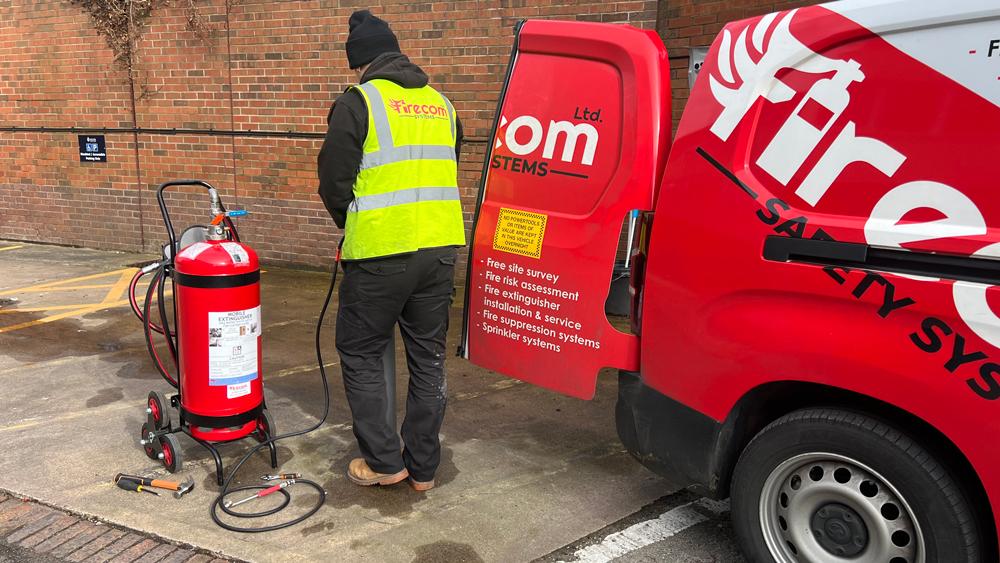
Under UK law, completing a fire risk assessment is not a static task but a continuous legal duty for all commercial premises. Responsible persons must review their documentation regularly to ensure safety measures align with structural changes, operational shifts, or updated guidance. Keeping these assessments up to date ensures regulatory compliance, prevents operational downtime, and secures full asset protection.
- The Regulatory Reform (Fire Safety) Order 2005 mandates regular reviews of all life safety measures.
- Major structural alterations, changes to building layout, or material storage updates require an immediate review.
- Annual reviews represent best practice under standard UK fire safety management protocols.
Commercial building owners, business owners, and facility managers hold a strict legal duty to safeguard occupants, staff, and assets. UK fire safety regulations require commercial organisations to proactively identify hazards and implement appropriate mitigation strategies. Over time, commercial environments naturally evolve. Office refits, workforce expansion, new machinery, and revised storage configurations directly impact your original risk calculations. Failing to maintain accurate documentation places lives at risk and leaves duty holders exposed to severe regulatory penalties.
Beyond legal compliance, an outdated fire risk assessment can severely jeopardise business continuity. Following a thermal incident or structural fire, insurance loss adjusters scrutinise historic safety logs, maintenance records, and risk management protocols. If your written assessment fails to reflect the current building layout, occupant numbers, or fire load, insurers may dispute or invalidate coverage. Partnering with an accredited fire safety partner guarantees that every aspect of your life safety strategy remains robust, auditable, and fully compliant.
WHY REGULAR RISK ASSESSMENT REVIEWS ARE CRITICAL
- Legal Compliance: Fulfils statutory obligations under Article 9 of the Order.
- Life Safety: Adapts escape routes and detection to current building usage.
- Asset Protection: Matches suppression systems to changing fire loads.
- Business Continuity: Prevents severe financial loss and invalidation of insurance.
An immediate review of your fire safety risk assessment is legally required whenever significant changes occur within your commercial premises or business operations.
1. Structural and Layout Building Alterations
Modifying the physical space directly alters how fire and smoke behave during an incident. Constructing new partition walls, installing mezzanine flooring, or changing door swings can inadvertently block designated escape routes or create dead-end corridors. Furthermore, structural shifts often render existing detection coverage or sprinkler head layouts ineffective, directly breaching system standards such as BS 5839-1 for fire detection and alarm systems or BS EN 12845 for automatic sprinkler systems.
2. Significant Changes to Occupancy or Building Usage
Changes in how a building is occupied require an immediate review of your evacuation strategy. Increasing headcounts, employing staff with mobility limitations, or shifting to 24/7 shift operations alters risk exposure levels. The safety infrastructure must adapt to support changing occupancy profiles, ensuring safe egress routes and sufficient emergency lighting under all operational conditions.
3. Introduction of New Hazards or Combustible Materials
Introducing hazardous substances, high-density pallet racking, or heavy machinery increases a building's fuel load. For instance, converting standard office storage into a dedicated IT server room introduces concentrated electrical risks. High-value assets like data rooms require specialised suppression systems, such as gaseous fire suppression in accordance with BS EN 15004, rather than standard water sprinklers, to prevent catastrophic asset damage during a discharge.
4. Following a Fire Incident, False Alarm Trend, or Near-Miss
Any thermal event, regardless of size, serves as an immediate indicator that existing risk controls must be re-evaluated. Repeated false alarm activations also highlight underlying system faults, poor environmental placement of detectors, or inadequate maintenance regimens. Investigating these occurrences allows premises managers to refine safety protocols, repair failing hardware, and update emergency response plans before a major incident occurs.
The primary legal framework governing commercial fire safety in England and Wales is The Regulatory Reform (Fire Safety) Order 2005. Article 9 explicitly states that the responsible person must review the risk assessment regularly, and immediately if there is reason to suspect it is no longer valid or if significant changes have occurred.
Recent legislative updates, including the Fire Safety Act 2021 and the Fire Safety (England) Regulations 2022, have heightened statutory scrutiny on multi-occupied and commercial structures. Duty holders must ensure that building structures, external wall systems, and fire doors are explicitly evaluated within their risk documentation.
"A fire and risk assessment cannot be treated as a static document sitting on a shelf," states Stuart Rye, Managing Director at Firecom Systems. "It is an active operational safety policy. When building layouts or operational dynamics evolve, your detection, suppression, and maintenance regimens must adapt in parallel to ensure total compliance and protection."
Standard industry best practice dictates that a fire risk assessment undergo a formal annual review, with a comprehensive reassessment conducted every three to four years.
While legislation does not set a rigid calendar date, enforcement authorities expect documented, periodic reviews. According to official data from the Home Office Fire Statistics, fire and rescue services in England attended over 175,000 fires in a single year, highlighting the persistent operational risks facing commercial and non-residential properties.
To maintain compliance and verify that safety infrastructure remains suitable, commercial building owners routinely order professional fire risk assessments. Regular audits ensure that alarm systems, emergency routes, passive fire-stopping, and fire-suppression assets function in complete harmony.
Managing life safety compliance across complex commercial assets requires a comprehensive, turnkey approach. Firecom Systems provides complete end-to-end capabilities that span the full lifecycle of commercial fire protection:
- Design: Specialist engineering of detection, alarm, and suppression systems tailored to specific building layouts and relevant British Standards.
- Installation: Professional deployment of hardware, wiring, containment, and control panels by accredited fire safety engineers.
- Commissioning: Rigorous testing, calibration, and accreditation to verify that all components operate correctly under emergency conditions.
- Maintenance: Scheduled testing and preventative maintenance regimens to maintain uninterrupted system readiness and regulatory compliance.
Conducting periodic fire risk assessment surveys allows facilities management teams to uncover hidden deficiencies, such as unsealed service penetrations, altered fire compartmentation, or out-of-date extinguisher inventory. Relying on an accredited, full-service partner ensures that all identified risks receive prompt, compliant remedial action.
- Document all findings: Record every identified hazard, structural change, and updated operational requirement in your official fire logbook.
- Develop an actionable mitigation plan: Prioritise action items based on risk severity and assign clear deadlines to competent personnel.
- Update emergency evacuation procedures: Align evacuation maps, assembly points, and Personal Emergency Evacuation Plans (PEEPs) with the updated assessment.
- Review physical fire protection systems: Verify that detection hardware, emergency lighting, and automatic suppression systems match current room configurations.
- Deliver refreshed staff training: Ensure all employees, floor wardens, and safety marshals understand updated risks and evacuation protocols.
- Schedule the next review milestone: Set a calendar reminder for the next 12-month review, or trigger an immediate audit if building alterations occur sooner.
Ensure your premises are fully compliant and protected. To discuss your fire protection requirements: